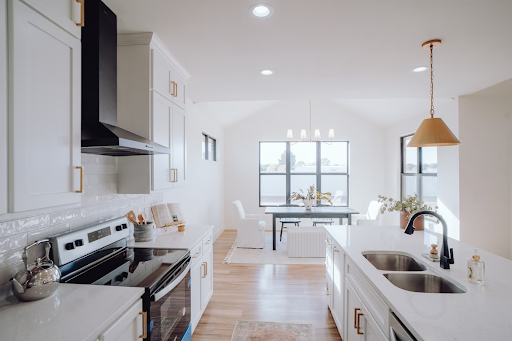
Industrial design has captured the hearts of Australian homeowners looking to create kitchens that blend raw authenticity with modern functionality. This design style, rooted in converted warehouses and loft spaces, brings an urban edge to residential cooking spaces through exposed materials, metal fixtures, and clean lines. More than just a trend, industrial aesthetics offer a timeless approach that celebrates both form and function.
Major Aspects That Characterise Industrial Style
All kitchens commence with their finishes and signature materials. Exposed brick walls make perfect foregrounds with their warmth and texture but that coveted warehouse look. If your own home is lacking original brickwork, then brick veneer or painted brick-effect wallpaper is a good substitute.
Metal accents constitute yet another fundament of this design. Stainless steel appliances, copper pipe shelving units, and black iron fixtures give rise to that raw, unpainted appearance that is intrinsic to industrial design. Such a finish is not only very striking but is also hardy enough to withstand everyday usage in a kitchen.
Concretes offer one of the most dramatic statements you can make. With their smooth, minimalistic finish, they offer a great juxtaposition to warm materials but excellent heat retention and durability.
Simple Ways to Incorporate Industrial Elements
Start with an inexpensive makeover by swapping stock cabinet hardware with black metal hinges and handles. It’s a quick adjustment that makes a dramatic difference to appearance without much renovation work.
Reclaimed wooden plank shelves with metal brackets replace upper cabinets to add visual interest as well as to show off your dishes and cookware. It can make tiny kitchens appear smaller, but adds an industrial appearance to a kitchen.
You might also want to install pendant lights with metal shades or Edison bulb fixtures that are hung from the ceiling. These lighting options have both task lighting and ambient warmth that temper the harsh lines of industrial finishes.
Blending Cosy with Natural Materials
While industrial design promotes untreated materials, Aussie homes also enjoy features preventing the area from being too frigid or clinical. Add warm wood finishes with bar stools, cutting boards, or shelves to achieve visual equilibrium.
Effective lighting also creates a balance. Overlap varying light sources throughout the home by blending overhead pendant lighting with under-the-cabinet LED lighting, as well as accent lighting. It emphasises architectural elements but produces a warm atmosphere for family events.
Install plants or herbs within metal planters to introduce some life and vibrancy into the space. Vegetation brings with it a quality of inherent contrast to industrial finishes with functional purposes within a kitchen space.
Designing Your Ideal Industrial Kitchen
Designing an industrial kitchen is an opportunity for homeowners across Australia to create spaces that are classy but also warm. With a consideration of raw ingredients alongside warm elements, you’re able to create a look that’s unmistakingly modern but still comfortable to live with day to day.
It’s either phased implementation or complete rejuvenation. It’s okay to start with one or two signature elements and incrementally add to your design over time as budgets and inspiration permit. That’s a phased solution to a renovation that feels organic rather than contrived.