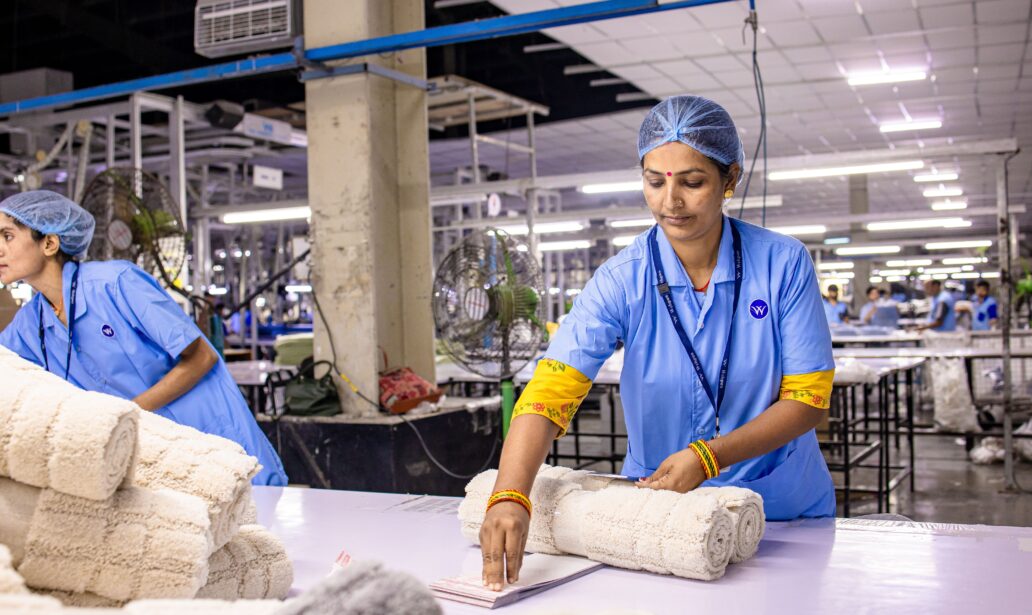
Manufacturing has long been perceived as a male-dominated industry, and statistically, that’s been true. But the landscape is changing and changing faster than many people realize. With advanced manufacturing technologies, better workplace safety standards, and growing awareness of the talent gap in skilled trades, the case for women entering manufacturing has never been stronger. Here’s why this shift matters, and why it represents an extraordinary opportunity.
The Industry Is Evolving Rapidly
The factories of today are very different from the factories of the past. Now, we have machines that can do things on their own, computers that can do work, and systems that are connected to each other. This means that people who work in manufacturing need to have skills like being able to program machines, run complicated systems, check the quality of things, and manage projects.
These skills are not specifically for men or women, they are for anyone who is trained and able to do them. The things that used to make it hard for women to work in manufacturing are not a problem anymore because of technology.
There’s a Significant and Growing Talent Shortage
The manufacturing sector is facing a serious talent crunch. An aging workforce, increased demand for specialized skills, and decades of young people being steered away from skilled trades have created a gap that threatens industry competitiveness. Companies are actively searching for qualified workers, and those who do enter the field regardless of gender are walking into strong demand, competitive wages, and significant advancement opportunities.
Industries like oil and gas, aerospace, and heavy equipment manufacturing in cities like Houston are among those with the most urgent needs.
Highly Specialized Fields Like Hydraulics Need Diverse Talent
Take the hydraulic equipment sector as one example. Companies working with hydraulic equipment in Houston, Texas, are constantly looking for skilled technicians, engineers, and systems specialists. Hydraulic systems power everything from heavy machinery to industrial equipment to aerospace components – it’s sophisticated, high-stakes work that requires both technical knowledge and problem-solving ability.
There’s no reason why women can’t bring exactly those skills to roles working with hydraulic equipment in Houston, Texas, and many already are. The companies that actively recruit and retain women in these roles are finding that diverse teams outperform homogeneous ones across virtually every measurable dimension.
The Wages and Benefits Are Genuinely Competitive
One of the persistent misconceptions about manufacturing careers is that they’re low-wage. For unskilled entry-level positions, wages have historically been modest. But for skilled manufacturing technicians, machinists, engineers, quality specialists, and supervisors, the compensation is competitive with and often exceeds comparable roles in other sectors.
Add comprehensive benefits packages, pension plans, and union protections in many cases, and manufacturing can represent one of the most financially rewarding career paths available without a four-year degree.
Mentorship and Community Are Growing
The number of organizations dedicated to supporting women in manufacturing has grown substantially. Networks like Women in Manufacturing (WiM) provide community, mentorship, professional development, and advocacy for women at every stage of their manufacturing careers. For women considering the field or early in their career, these communities can make an enormous difference in retention and advancement.
Manufacturing needs women, and women stand to gain enormously from manufacturing. With strong wages, growing opportunities, and an industry actively evolving in welcoming directions, there has never been a better time for women to consider and pursue careers in this vital sector.